

EIS EXPEDITION TEAM
Founded by internationally acclaimed nature and outdoor photographer James Balog, the Extreme Ice Survey is very much a team effort. The project involves close collaboration between Balog and many experts in glaciology and atmospheric science, particularly Dr. Tad Pfeffer.
James Balog
Founder & President of Earth Vision Institute and the Extreme Ice Survey
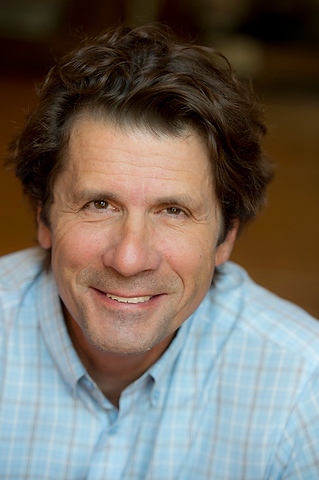 For 35 years, photographer James Balog (“BAY-log”) has broken new conceptual and artistic ground on one of the most important issues of our era: human modification of our planet’s natural systems. He and his Extreme Ice Survey team are featured in the 2012 internationally acclaimed, Emmy award-winning documentary Chasing Ice and in the 2009 PBS/NOVA special, Extreme Ice. James has been honored with many awards, including, most recently, the Heinz Award, the Duke University LEAF Award, the Rose-Walters Prize at Dickinson College for Global Environmental Activism, an Honorary Doctor of Science Degree from the University of Alberta, and the American Geophysical Union Presidential Citation for Science and Society. He is the author of ICE: Portraits of Vanishing Glaciers and seven other books. His photos have been extensively published in major magazines, including National Geographic, and exhibited at more than one hundred museums and galleries worldwide. In 2009, he served as a U.S./NASA representative at the United Nations Conference on Climate Change (COP 15) in Copenhagen. In 2015, at COP 21 in Paris, he made numerous presentations on behalf of the Natural Resources Defense Council (NRDC), The United Nations Foundation and Solutions COP 21 at the Grand Palais.
“Each new series by James Balog represents a quantum leap in creativity, which takes us deeper into the ultimate mystery of humanity’s relationship to the natural world. He is a visionary and his works are like sacred objects.”
—James Nachtwey, TIME magazine photographer

The Nikon Ambassadors are authorized by Nikon to demonstrate to the public and professional image makers the capabilities and use of Nikon imaging products, but the expressive content of their work is solely their own. Nikon Ambassadors are independent contractors and visual artists and are not employees of Nikon. Nikon Ambassadors are responsible for the content of their photographs, websites, exhibitions, and visual images and the manner in which such content and images are obtained. Any messages, beliefs, or viewpoints expressed in the Nikon Ambassadors’ photographs, websites, exhibitions, or visual images do not necessarily reflect the opinions, beliefs or viewpoints of Nikon or any Nikon employee.
“For the kinds of places I go, the equipment has to be reliable. At 20,000 feet above sea level, or at -30 degrees, the equipment has to work. It can’t fail. Nikon equipment, I’ve been using it for 28 years. It works. And, I’ll continue to work with it as long as I’m shooting pictures.”

Photo by Sven Lindblad
Nikon Ambassadors are some of the most talented and influential visual artists working in the business today. These gifted, spirited storytellers go above and beyond most, and are admired for their passion, energy and commitment to their craft. Their investment in, and trust, of the Nikon brand are cornerstones to their image making abilities.
As a loyal Nikon partner, Nikon Ambassadors’ commitment and contributions to the photographic industry throughout their careers have influenced and inspired photographers around the world; while their desire to educate and empower other image makers around them has become a part of their daily business. From workshops to trade show platforms, online learning and social media; Nikon Ambassadors represent the most versatile and ambitious photographers today. These visual artists are respected around the globe for their vision and accomplishments.
The dedication to advancing the art of visual storytelling while embracing and mastering the latest technologies and trends in the field are paramount to these photographers being selected as Nikon Ambassadors.
As the top visual storytellers of this era, their advanced techniques, unprecedented creativity and tenacious approach to imaging solutions is demonstrated assignment after assignment, each and every time they pick up a Nikon camera.

Photo by Adam LeWinter Extreme Ice Survey
“For the EIS project, we used Nikon D200 and D300 bodies, secured in weatherproof housings. Powered by solar panels, batteries and other electronics, they are able to withstand temperatures as low as -40˚F and winds as strong as 160 mph, as well as blizzards, landslides and avalanches.”
Jason E. Box, Ph.D.
 Dr. Box has made 20 expeditions to the Greenland ice sheet since 1994. His time on the inland ice exceeds 1 year. Dr. Box was awarded a NASA grant to support the installation and maintenance of Greenland EIS cameras. Jason is active in Greenland fieldwork for EIS and is using EIS photos from Greenland to measure glacier speed changes, putting precise numbers on glacier flow sensitivity to climate. As an authority on the relationship between Greenland glaciers and climate, he’s authored or co-authored 26+ peer-reviewed publications directly related to ice and climate and has led, since 2003, the annual Greenland entries for the National Oceanic and Atmospheric Administration and American Meteorological Society’s “State of the Climate” report. He was a contributing author to the Intergovernmental Panel on Climate Change (IPCC) fourth and fifth assessment reports. Jason was a research scientist at Byrd Polar Research Center and associate professor in Geography at The Ohio State University from 2002 to 2012. He is currently a professor in Glaciology at The Geologic Survey of Denmark and Greenland (GEUS). Learn more about Jason’s work.
W. Tad Pfeffer, Ph.D.
 Dr. W. Tad Pfeffer is a glaciologist, geophysicist, and photographer at the University of Colorado at Boulder. He is a Fellow of the University’s Institute of Arctic and Alpine Research and Professor in the Department of Civil, Environmental, and Architectural Engineering. He is currently on assignment with the U.S. Department of State and U.S. Agency for International Development (USAID). His research areas include the mechanics and dynamics of glaciers and heat and mass transfer in snow. He has worked on glaciers for 30 years, traveling to Alaska, Arctic Canada, Greenland, Antarctica, and mountain locations in North America and Europe. He has done fieldwork on Alaska’s Columbia Glacier for two decades. Tad is also active in photography and photogrammetry of glaciers and landscapes, using imagery for both description and analysis of glacier changes. In addition to scientific publications, his photographic work has appeared in exhibitions in the Boulder/Denver area, in American Scientist, GEO (Germany), Geotimes, BBC television productions, and in the movie and book, An Inconvenient Truth, by Nobel laureate Al Gore. Tad’s book, The Opening of a New Landscape: Columbia Glacier at Mid-Retreat, was published by the American Geophysical Union in December 2007.
Daniel B. Fagre, Ph.D.
 Dr. Fagre is is Research Ecologist and Climate Change Research Coordinator for the U.S. Geological Survey in Glacier National Park, Montana. Originally trained in wildlife biology and ecology, Dan has a unique perspective on the changes caused by global warming. He has been doing repeat photography on the dwindling ice masses of Glacier National Park for nearly 20 years. He is the author of the 2007 book Sustaining Rocky Mountain Landscapes: Science, Policy, and Management of the Crown of the Continent Ecosystem. He recently received the Director’s Award for Natural Resource Research from the National Park Service and serves on the Montana governor’s advisory board for climate change.
Conrad Anker
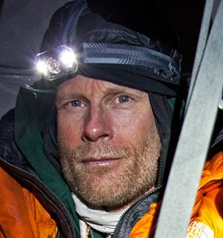 Renowned alpinist Conrad Anker approached James Balog about placing EIS cameras on Everest at the 2007 Rowell Award for the Art of Adventure ceremony in April 2008, where James was the recipient and Conrad the presenter. A member of The North Face climbing team, Conrad was able to secure funding from the company to make the Everest cameras possible. In 2010 he led a five-person EIS field team to the Khumbu Valley to install five time-lapse cameras.
EIS SUPPORT TEAMS
**We do not have any open positions at this time**
Camera Assembly/Installation/Field Support
- Matthew Kennedy – Extreme Ice Survey Manager and Multimedia Producer
- Svavar Jónatansson – Iceland Field Assistant
- Daniel McGrath, Ph.D. – Antarctica Project Manager; Research Scientist, Geosciences, Colorado State University
- Karina Yager – South America Project Manager
- Eric Guth – Lindblad Expeditions
- Corey Jaskolski – Tuatara Systems
- Dave Finnegan – US Army Corp of Engineers
- Shad O’Neel- USGS, Glaciologist, Alaska
- Nicholas Korzen – Alaska Field Assistant
- Eran Hood – Associate Professor Environmental Science & Geography Program, University of Alaska Southeast
Film Team
- Jeff Orlowski – Director and Post Production, Boulder, CO
- Stephen Nowland – Stephen Nowland Photography, Denver, CO
Operations
- Sport – Operations Manager/Administration, Boulder, CO
- Michael Aisner – Marketing/Consulting, Boulder, CO
Scientific Advisors
- Dr. Bernard Francou, Institut de Recherche pour le Développement, Quito, Ecuador
- Dr. Ian Joughin, Polar Science Center, University of Washington
- Oddur Sigurdsson, Member, Icelandic Glaciological Society
- Dr. Konrad Steffen, Director, Cooperative Institute for Research in the Environmental Sciences (CIRES),
University of Colorado - Dr. James White, Fellow and Director, Institute of Arctic and Alpine Research (INSTAAR), University of Colorado, Boulder
- Dr. Christian Vincent, Laboratoire de Glaciologie et de Géophysique de l’Environnement, Grenoble, France
- Dr. Martin Truffer, University of Alaska
- Dr. Mark Fahnestock, University of New Hampshire
- Alberto Behar, Ph.D., Former Polar Scientist, Extreme Ice Survey Team Member, in Memoriam